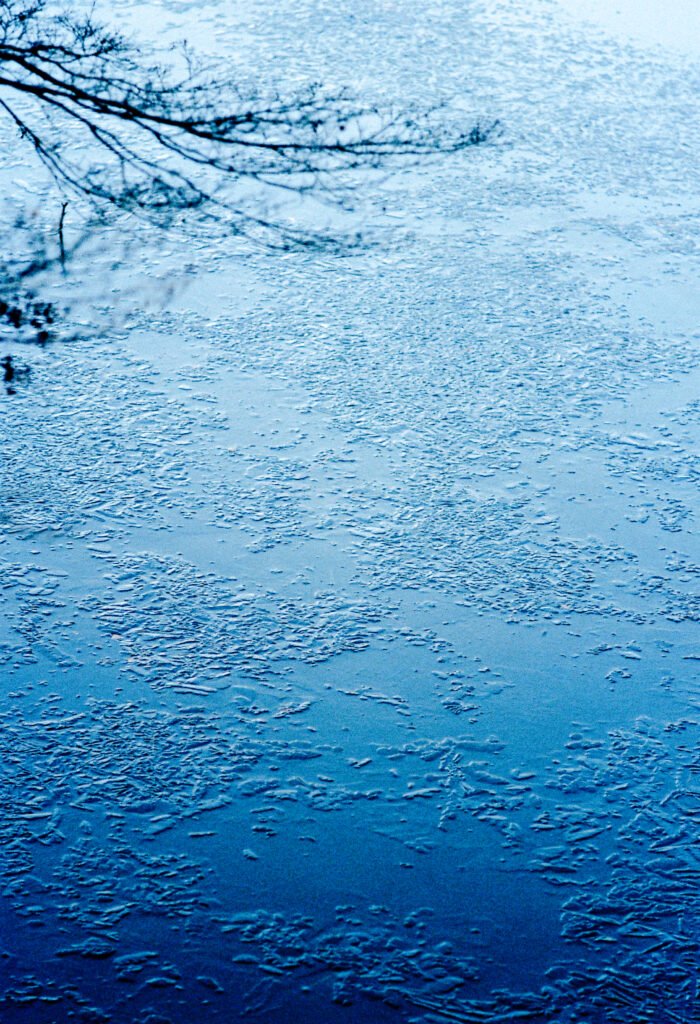
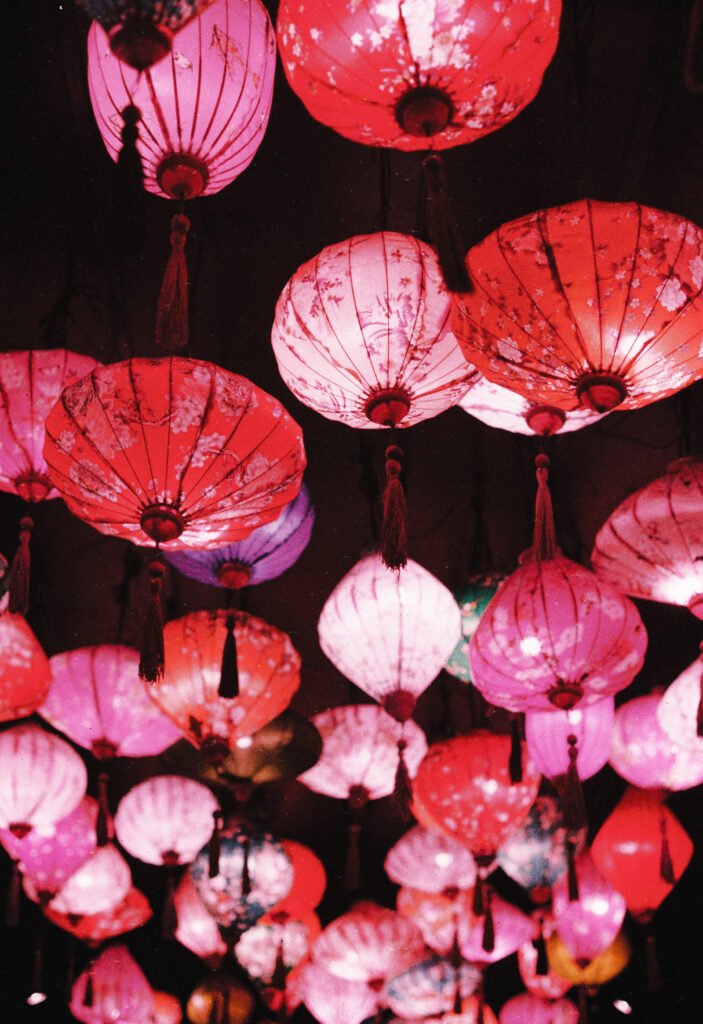
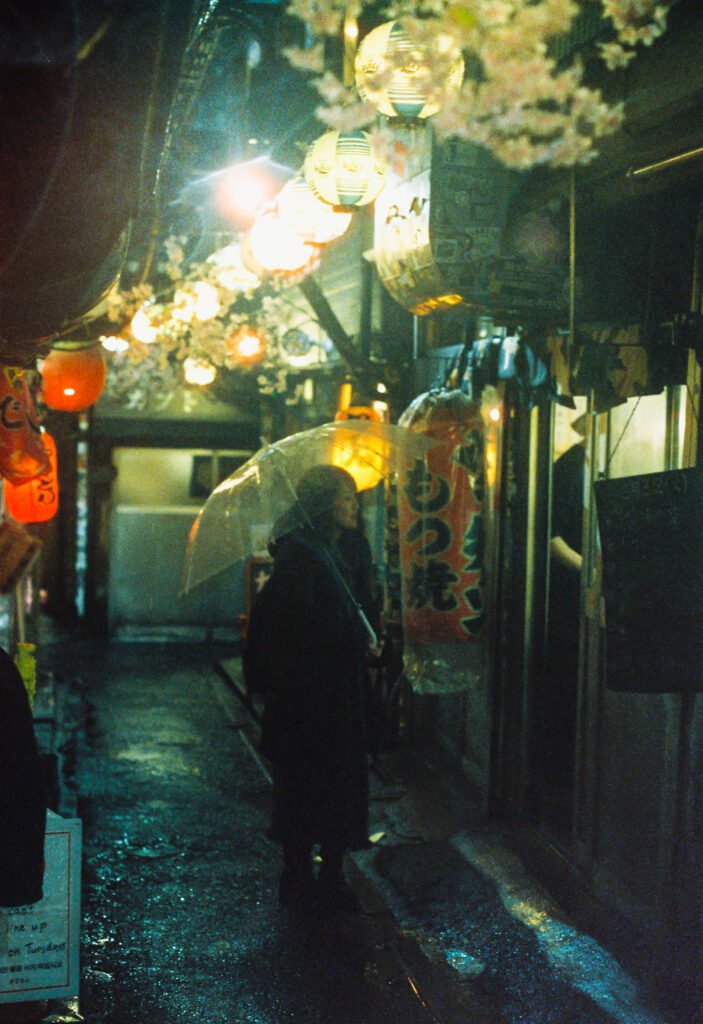
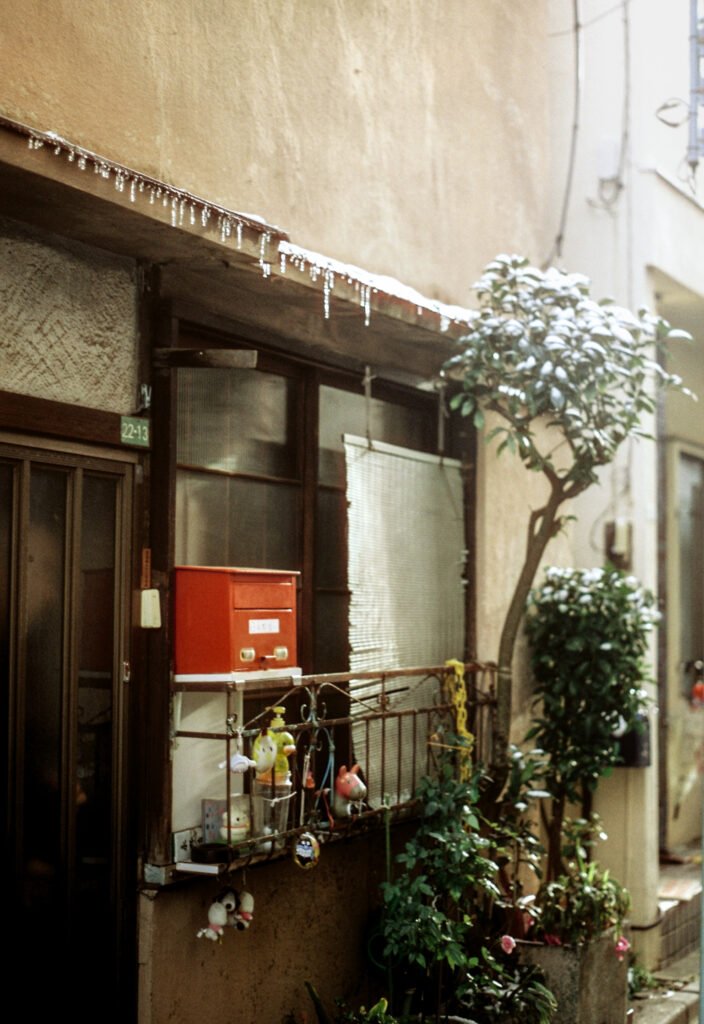
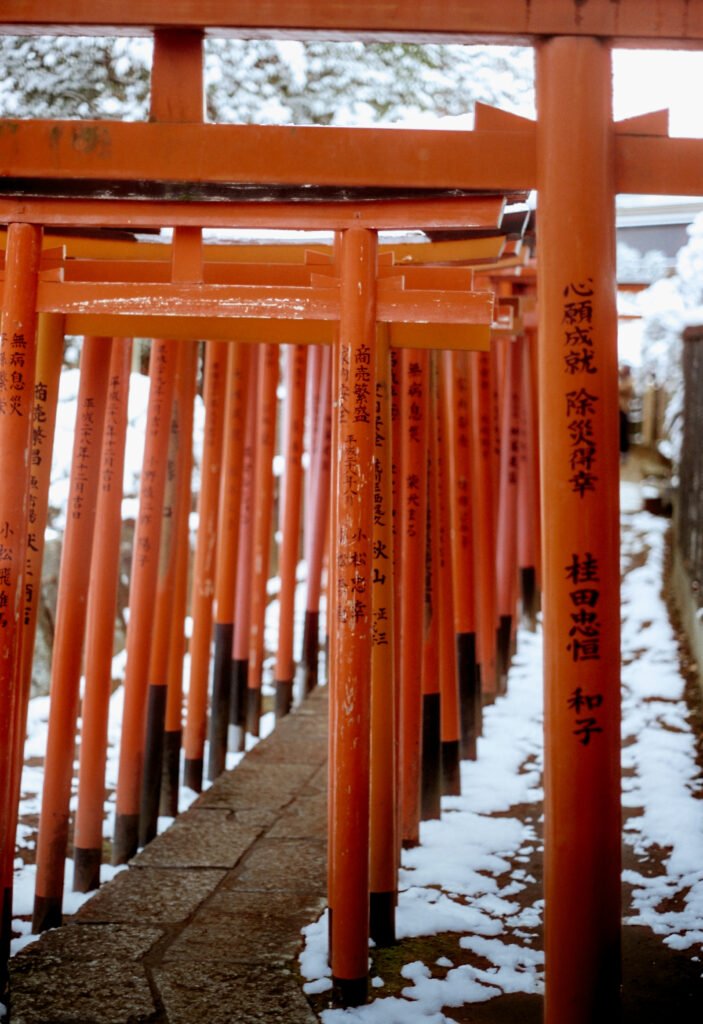
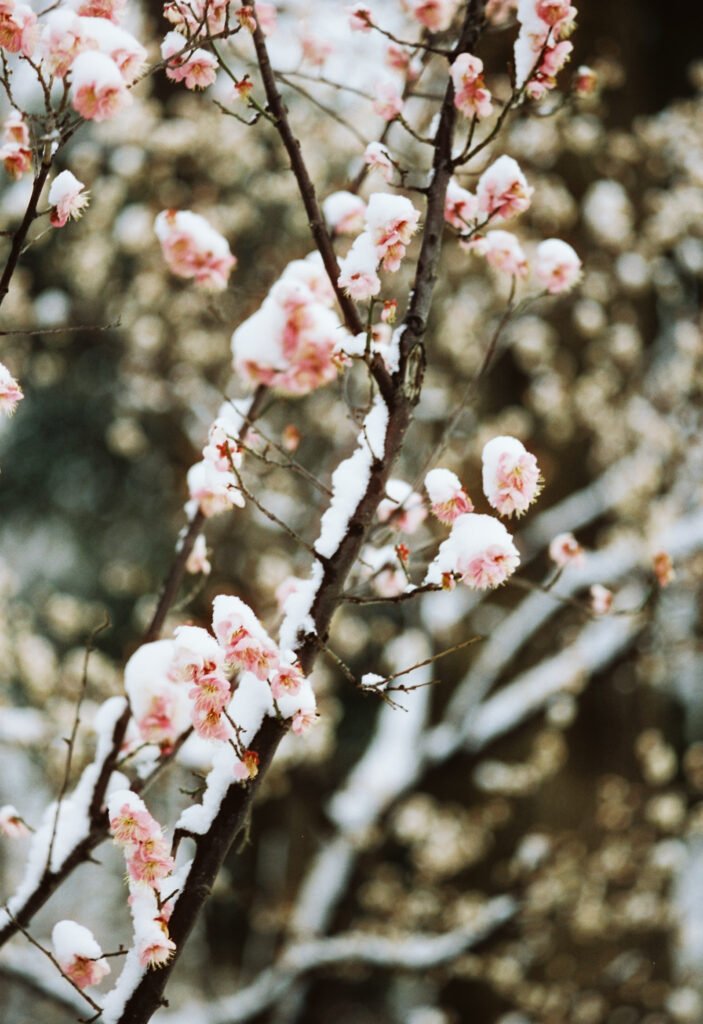
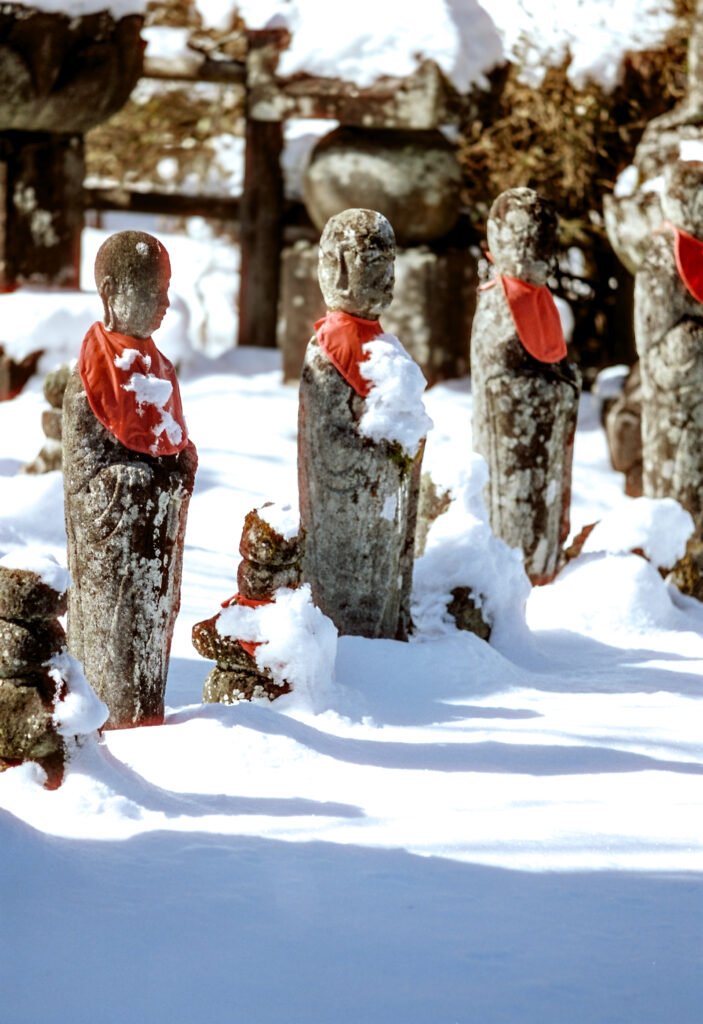
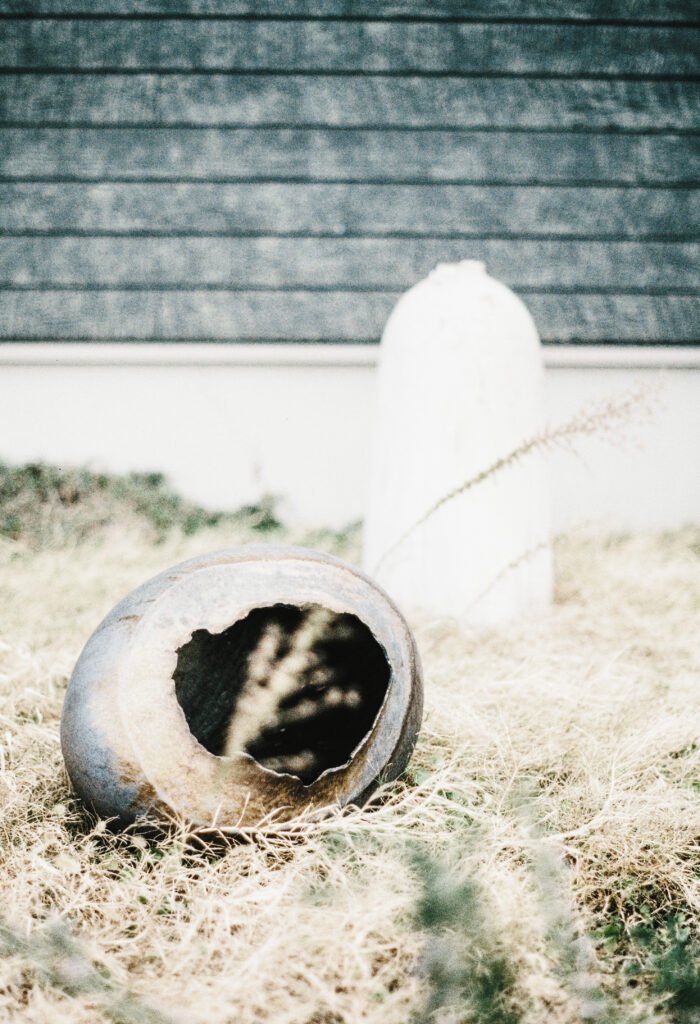
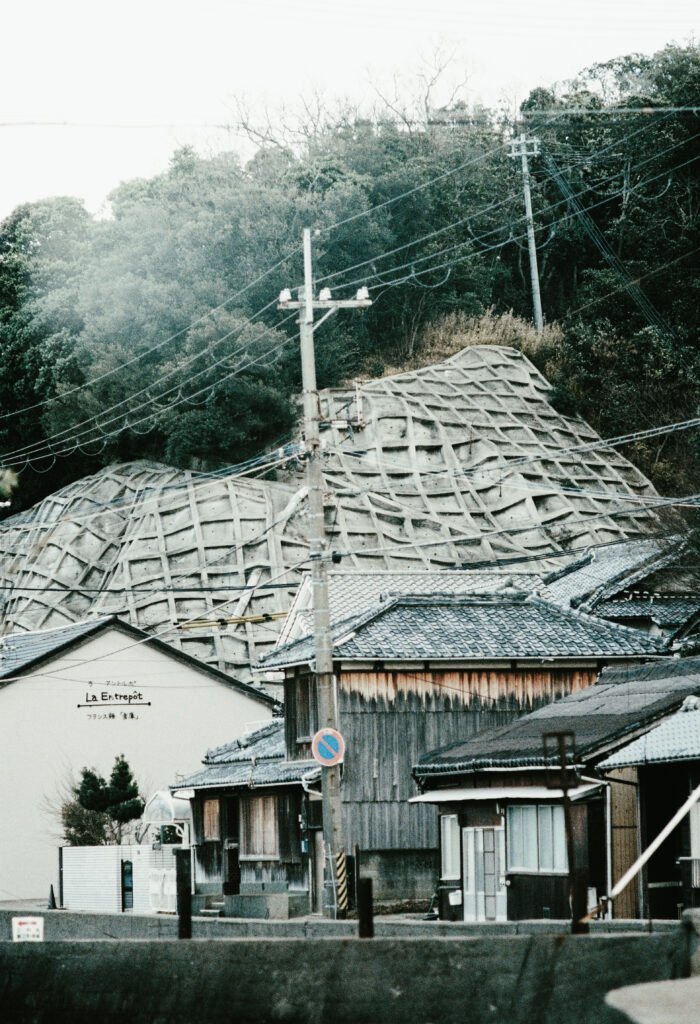
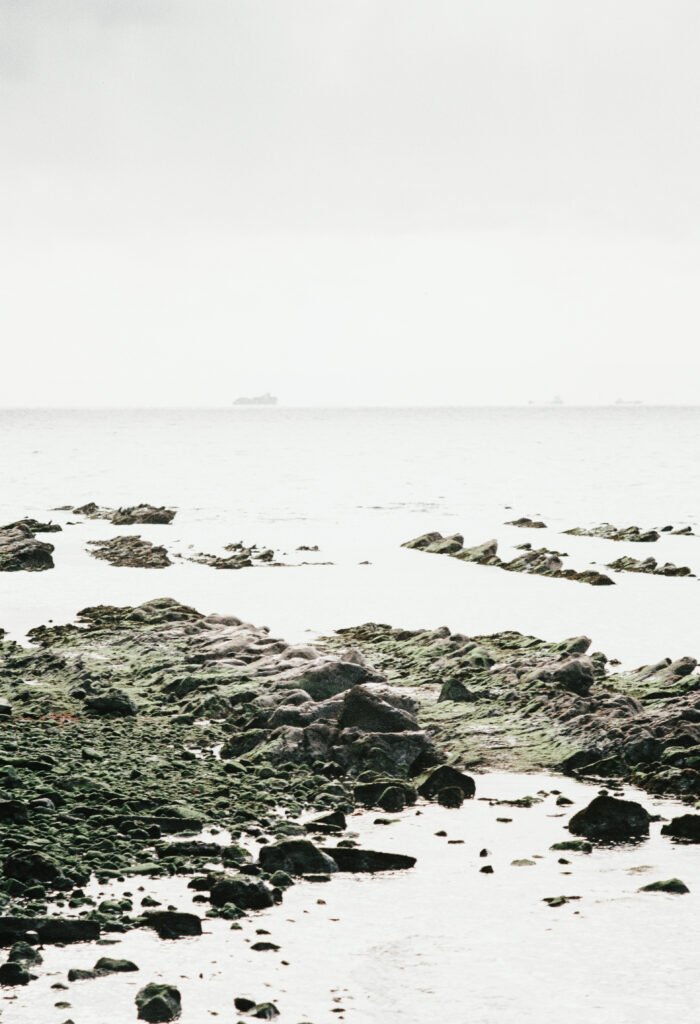
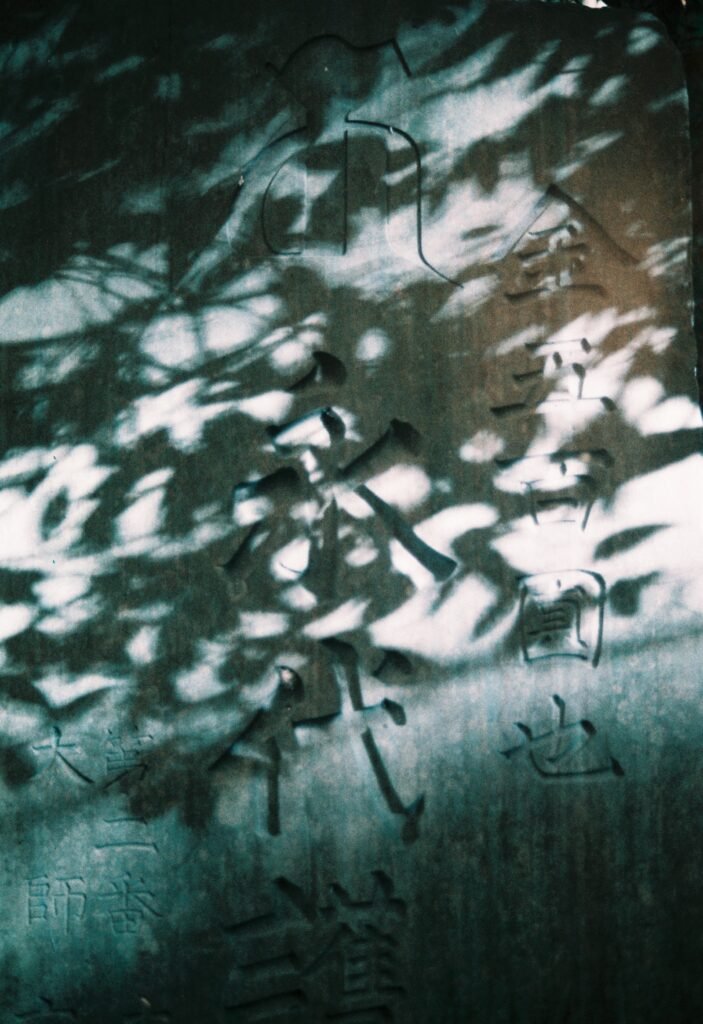
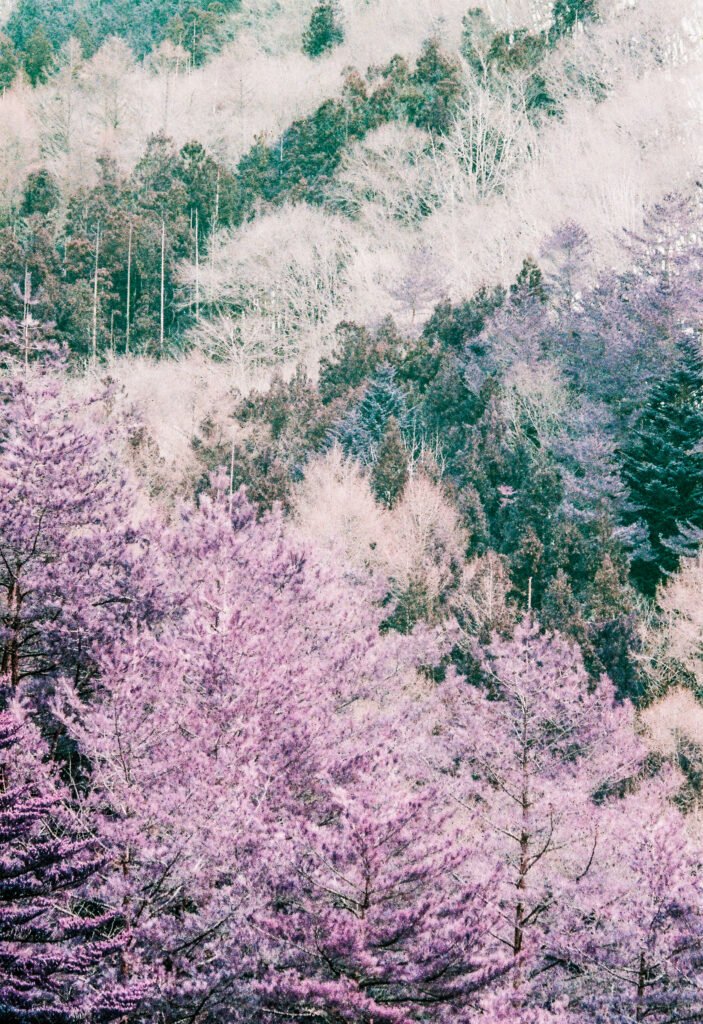
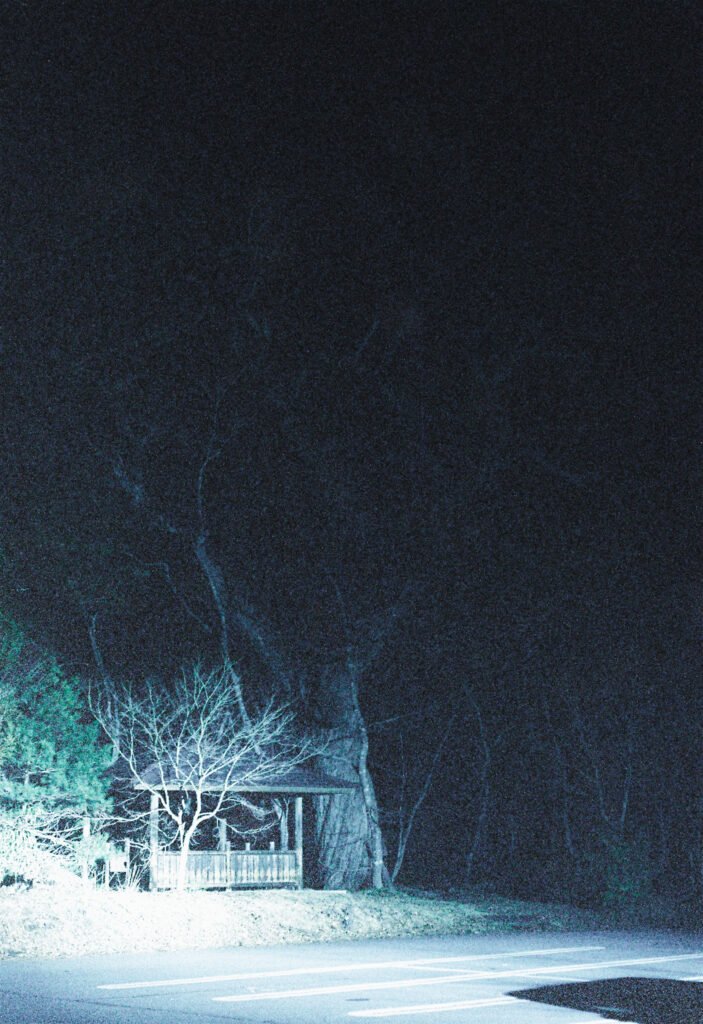
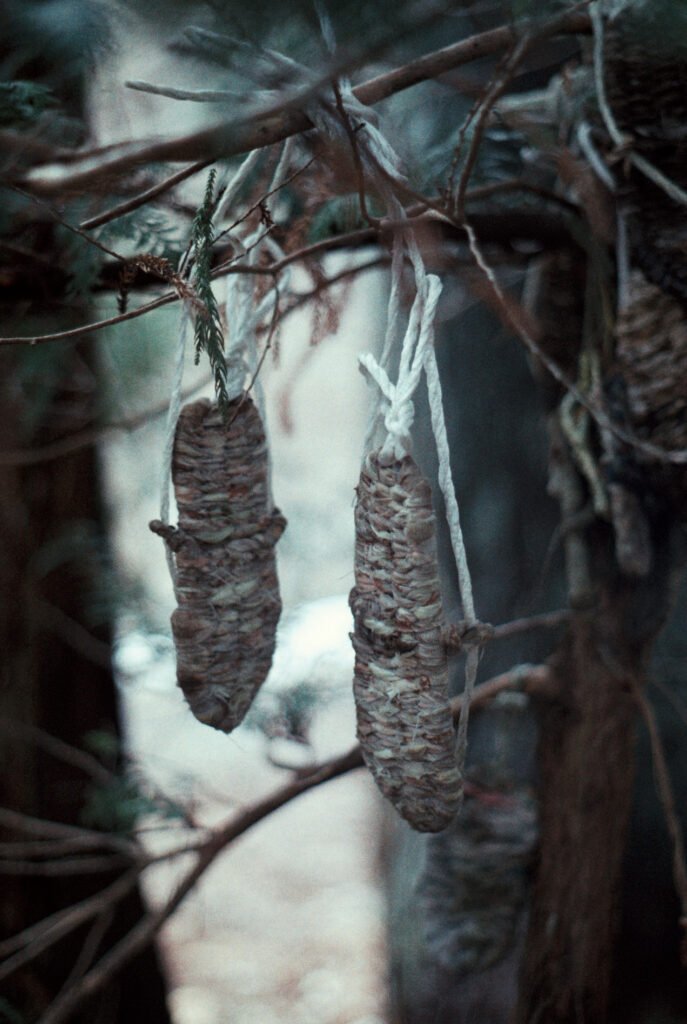
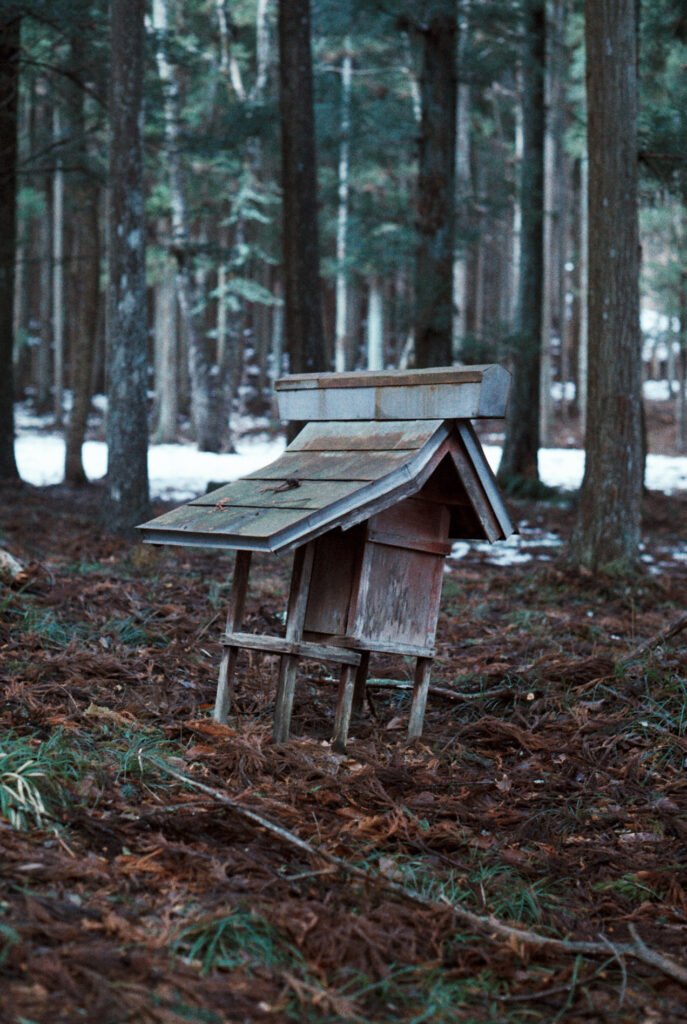
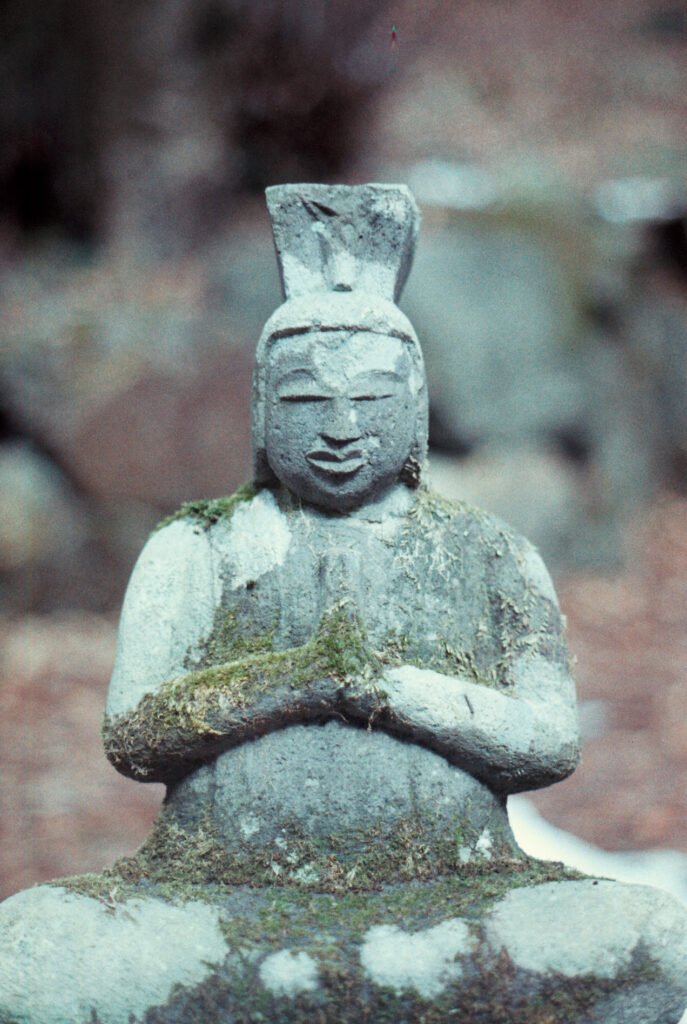
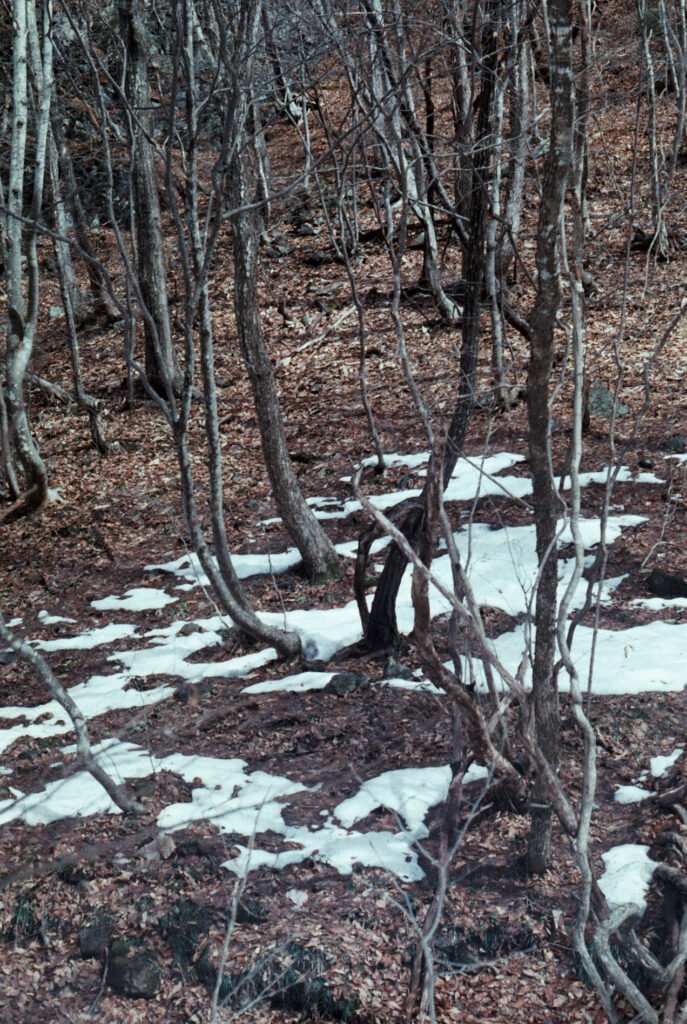
Created over the course of two months spent in Japan during the winter of 2026, these analogue photographs developed gradually throughout the journey, without a predetermined series in mind. From Tokyo to coastal villages and mountainous regions, I photographed instinctively, drawn to the elements that punctuated the places I moved through: objects left behind, animals, shrines, homes, forests, and subtle traces of human presence, even when no one appears within the frame.
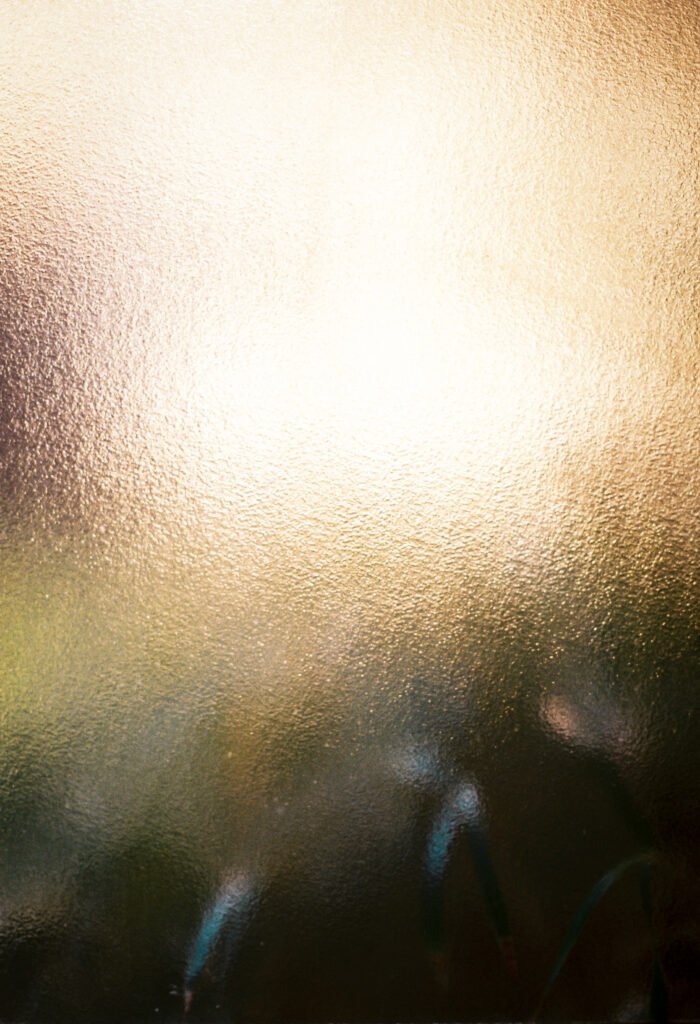
Analogue photography creates a distance between the moment experienced and the image eventually discovered. Some rolls of film were only developed several weeks after the photographs were taken; by then, the memory of the place had already begun to shift. Overexposure, unexpected colours, grain, and details swallowed by shadow became part of the images themselves.
Rather than offering a faithful portrait of Japan or retracing my journey precisely, these photographs gather fragments of it: places, encounters and presences that caught my attention and, once the film was developed, became the photographic memory of those two months.
TOKYO
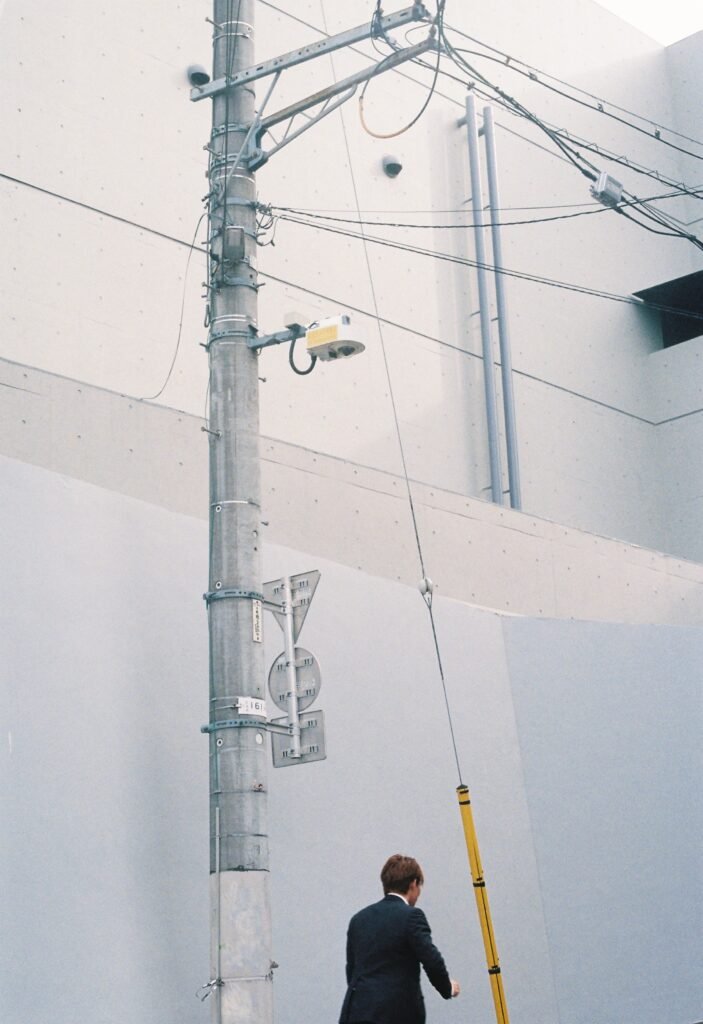
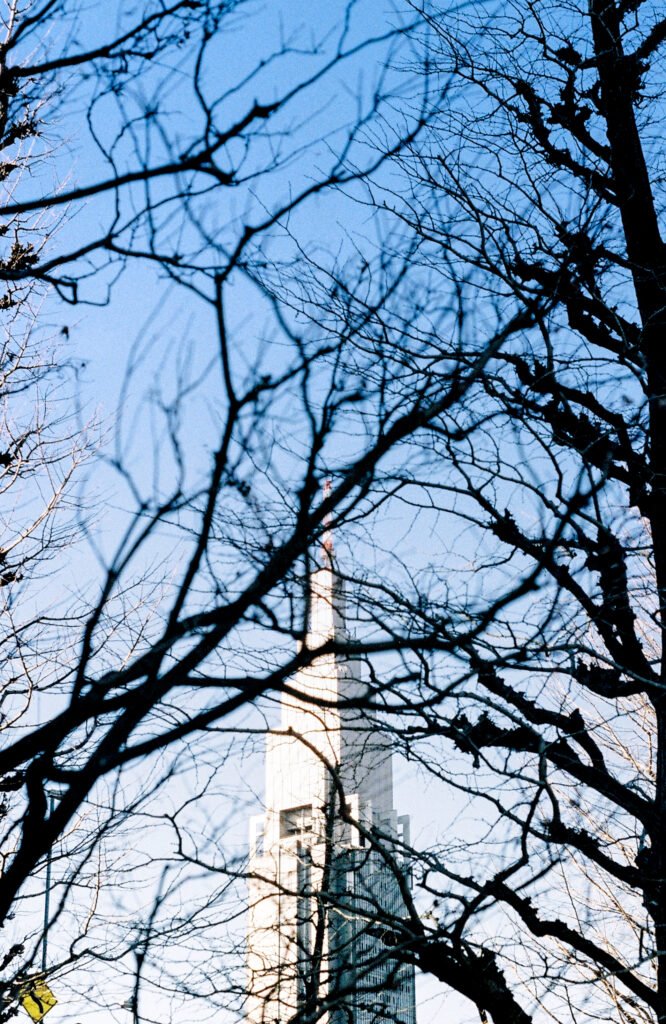
Tokyo was both the beginning of the journey and the place I kept returning to. Over time, the immensity of the city became familiar through smaller details: quiet residential streets, shrines tucked between buildings, tangled power lines, objects left outside homes, and traces of everyday life. Walking without a fixed destination became a way of discovering the city, photographing what existed in the spaces between its more recognizable landmarks.
KADA
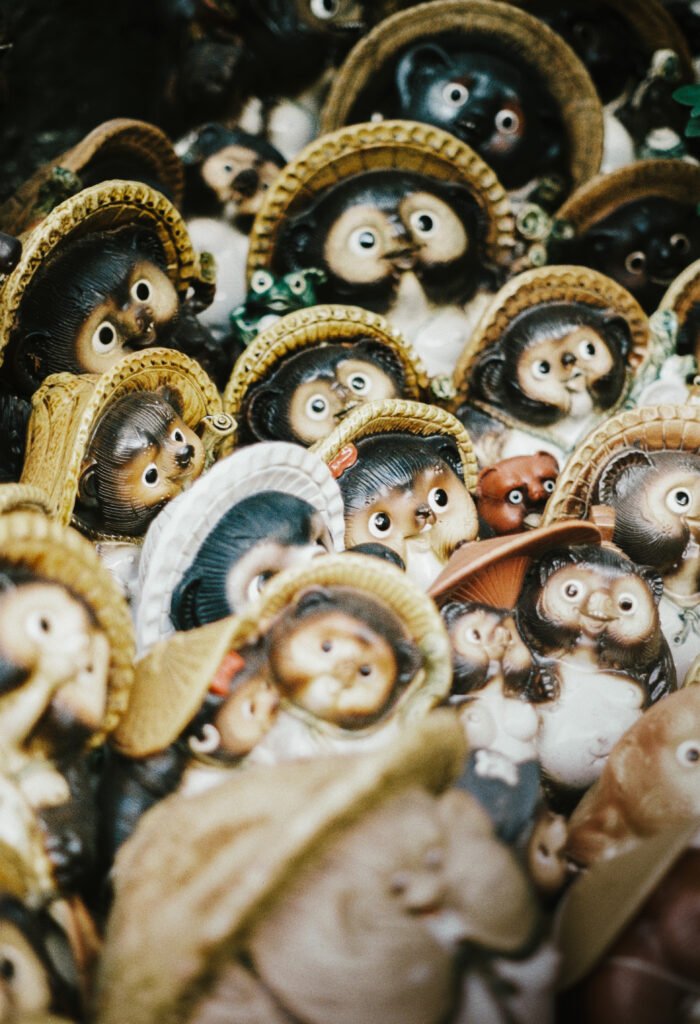
At the beginning of my journey, I spent some time in Osaka visiting friends. Looking for a quieter place away from the city, I took a day trip to Kada, a small coastal town nearby. I spent the day walking between the village and the sea, discovering shrines filled with curious collections of dolls and figurines, quiet streets and objects encountered along the way. What remains most strongly is the atmosphere of the place: the smell of salt in the air, the coastline fading into the distance, and a small meal in a tiny local restaurant, in the company of its owner and her old cat.
UBARA
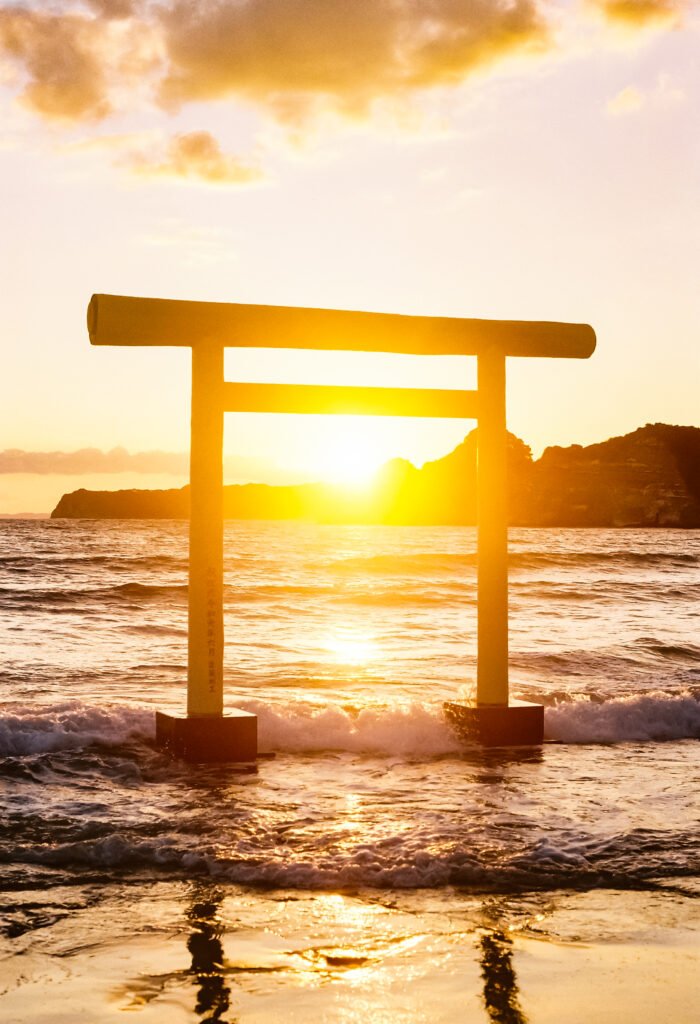
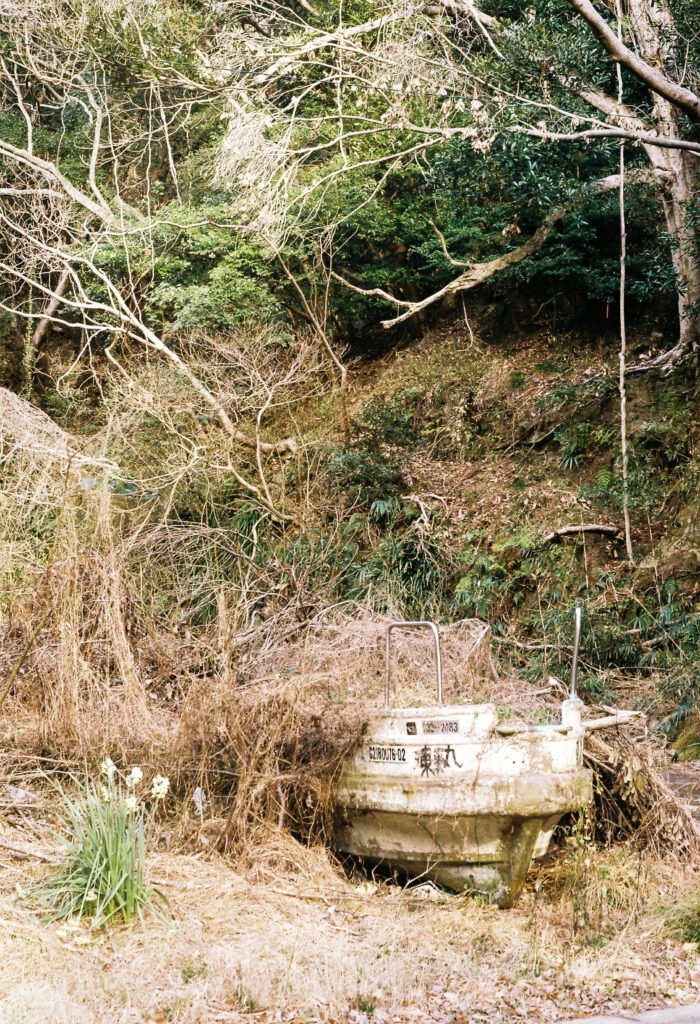
Ubara was one of the quietest and most unexpected stops of my journey. I stayed in an old traditional Japanese house near the coast, run by an elderly woman who shared the place with around twenty cats. The village was almost silent, surrounded by the sea and vegetation, and I spent my time walking along the coast and through its nearly empty streets. One evening, a cat followed me all the way down to the beach, stayed there with me for a while, and then followed me back home. Between the cats, the small muntjac deer I encountered while walking, and the strange sounds of the old wooden house at night, Ubara sometimes felt inhabited by more than what was immediately visible.
HAKONE
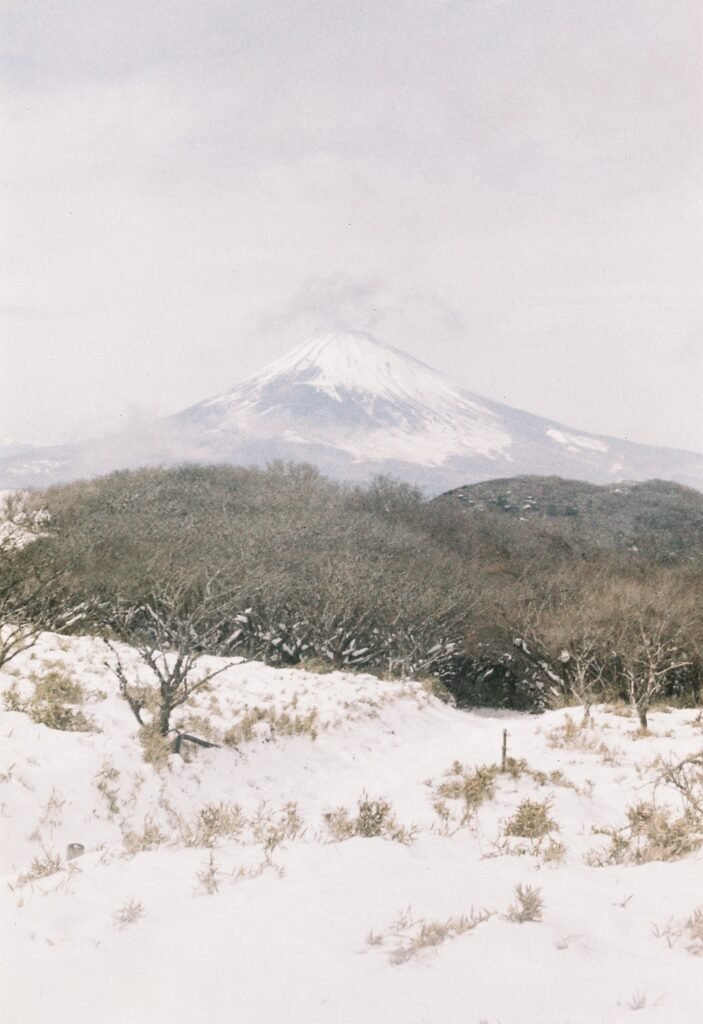
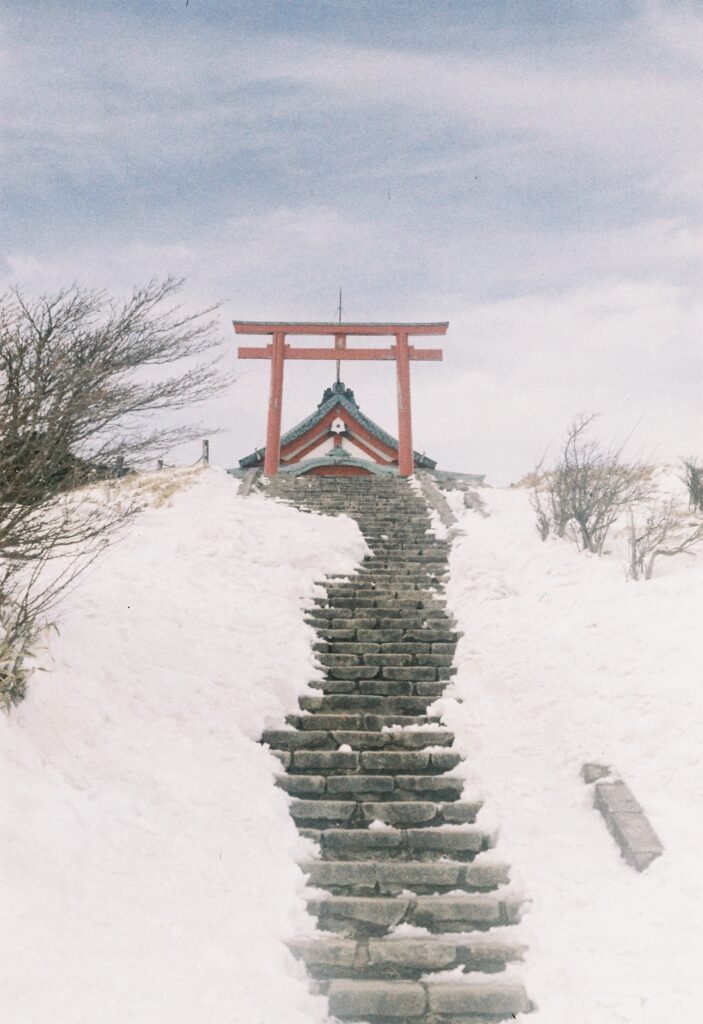
Hakone was a journey into a completely different landscape. I travelled around Lake Ashi and up towards Mount Komagatake, where Mount Fuji gradually appeared through the pale winter landscape. Snow covered the mountains and surrounded the shrines, while the weather shifted dramatically throughout the day, from clear views to wind, rain and melting snow. On film, Fuji became almost ghostlike, barely distinguishable from the sky, an unexpected image that feels closer to a memory of the mountain than to a postcard of it.
TAKAO
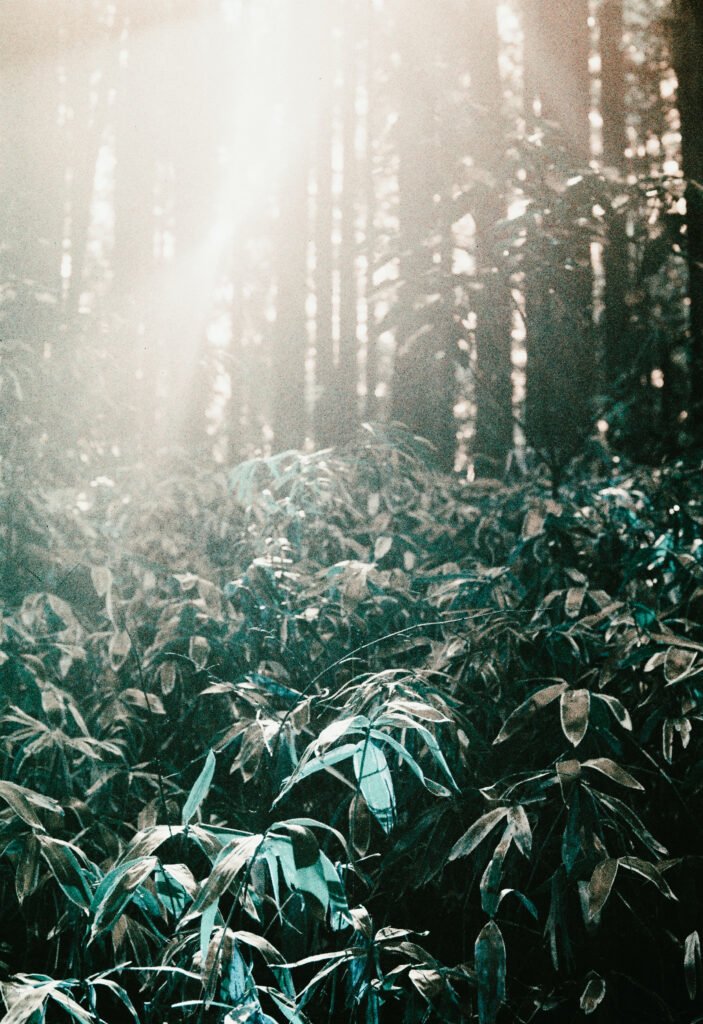
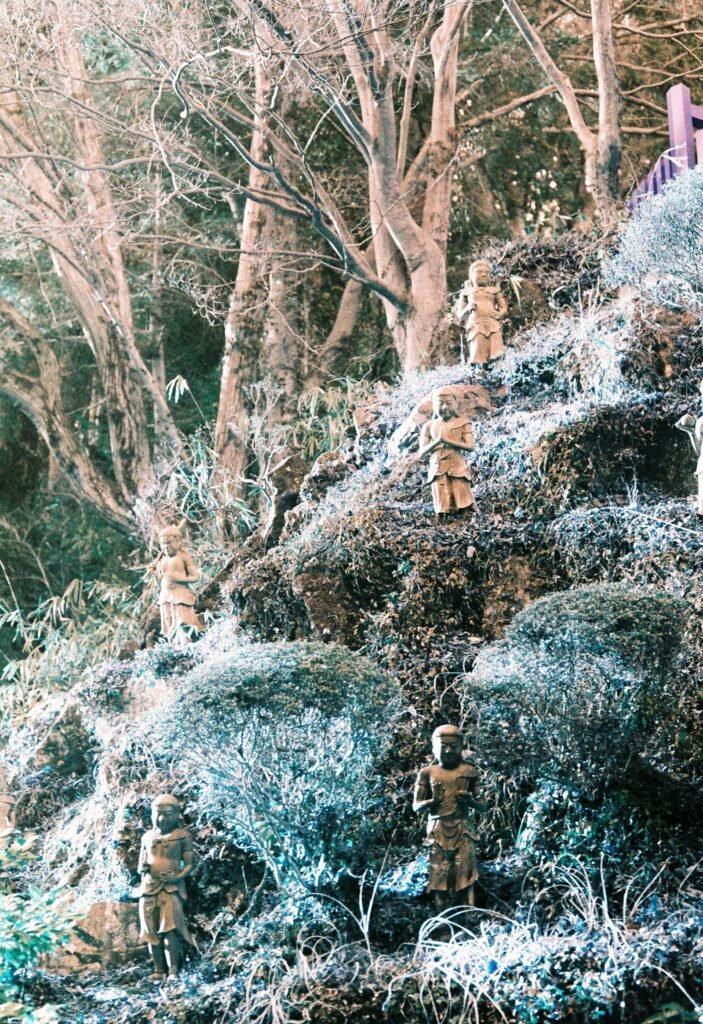
Mount Takao offered an escape into the forest without travelling far from Tokyo. I climbed to the summit on foot, passing temples, small statues hidden among the trees and dense stretches of vegetation along the way. At one point, curiosity led me onto a secondary trail that slowly disappeared until only a few red ribbons tied to the trees seemed to mark the way, a good moment to turn back. The forest remained the strongest memory of Takao: quiet, inhabited by small signs and figures, and transformed on film by unexpected bursts of light.
YUNISHIGAWA ONSEN
Yunishigawa Onsen was one of the last stops of my journey, hidden deep in the mountains of Tochigi. I stayed in a traditional room overlooking the forest, with snow still scattered beneath the trees and the sound of the river somewhere below. Walking through the village and surrounding woods, I encountered small shrines, moss-covered statues and traces of human presence emerging quietly from the landscape. I also met an elderly couple during one of my walks, and a conversation sparked by my analogue camera unexpectedly turned into an exchange about photography and my work. Of all the places I visited, Yunishigawa felt perhaps the most suspended in time, somewhere between the inhabited world and the forest surrounding it.