BLUE
Audiovisual installation & experimental photography - 2022
Blue emerged from a desire to push photography beyond the way I had previously understood and practised it. I wanted to explore the medium itself, and more specifically its relationship with the technology through which an image is produced.
One of the first impulses came during an internship at an analogue photography studio and laboratory in Brussels. There, I discovered old photographs on glass and metal plates that had been altered by time. Their deterioration had transformed the images: stains, chemical reactions, damaged surfaces and missing areas had become part of the photograph itself.
When I later discovered glitch art, I found in it a kind of digital counterpart to this fascination. Instead of waiting for time and matter to alter a photograph, it became possible to deliberately interfere with the data and technological processes that allow a digital image to exist.
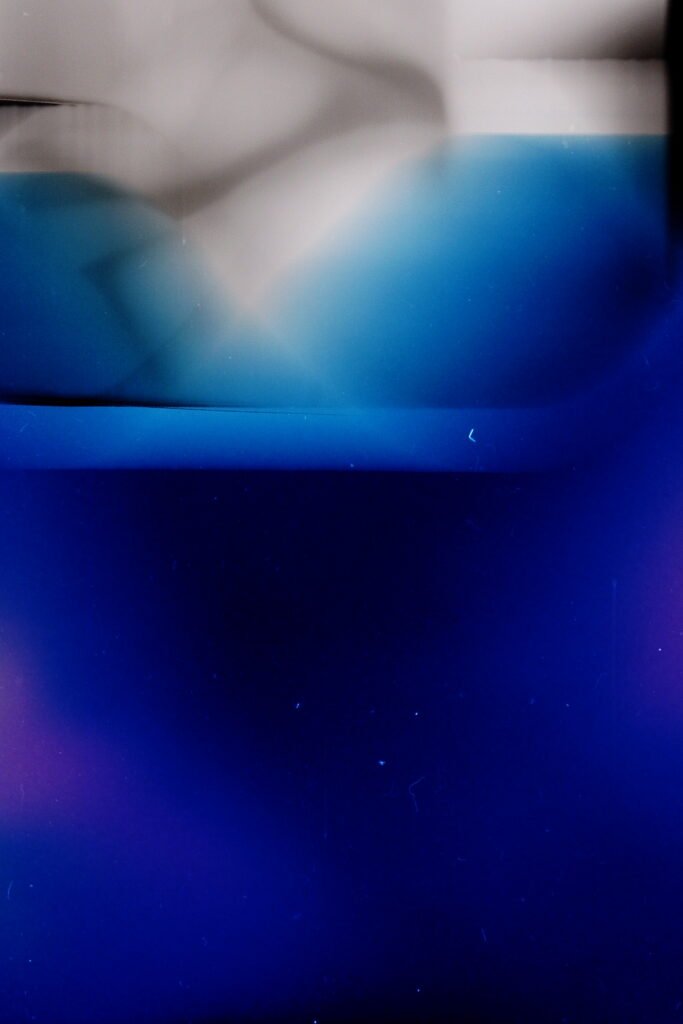
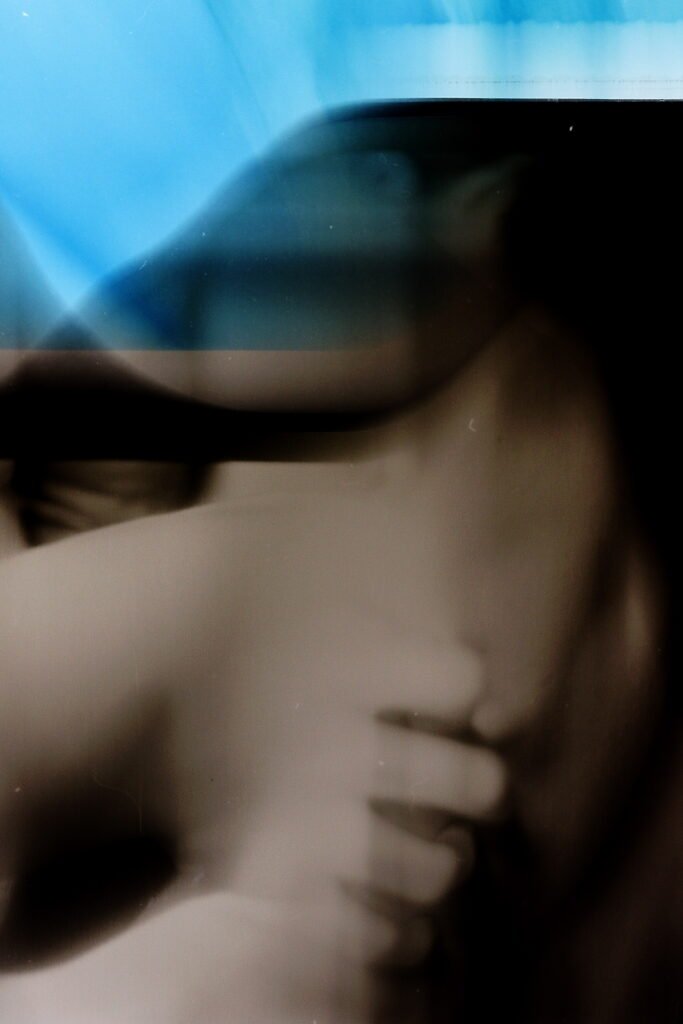
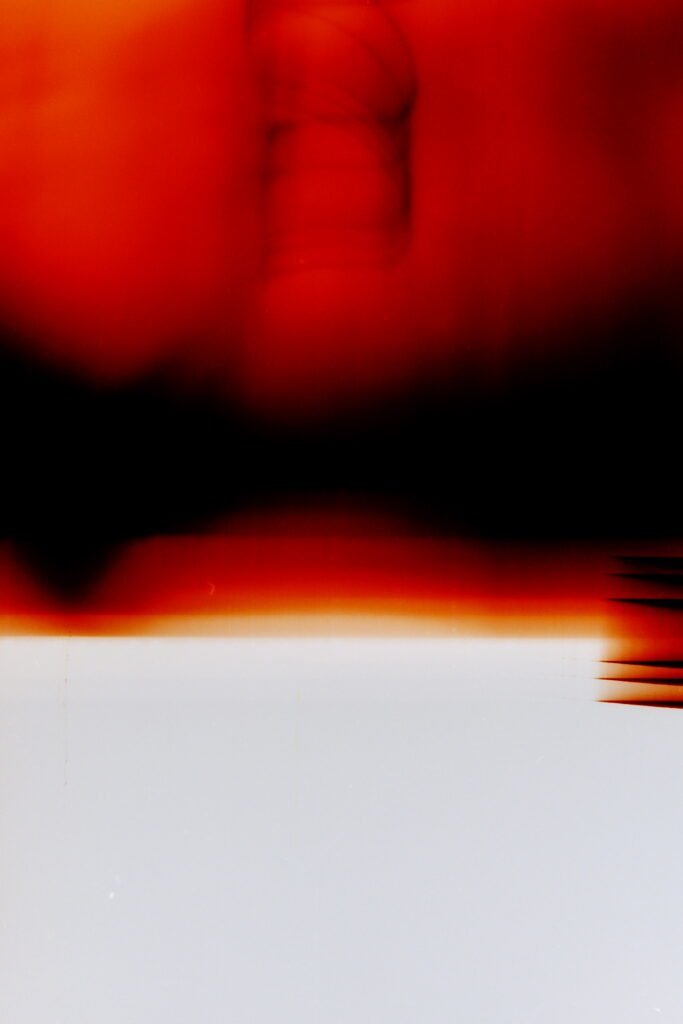
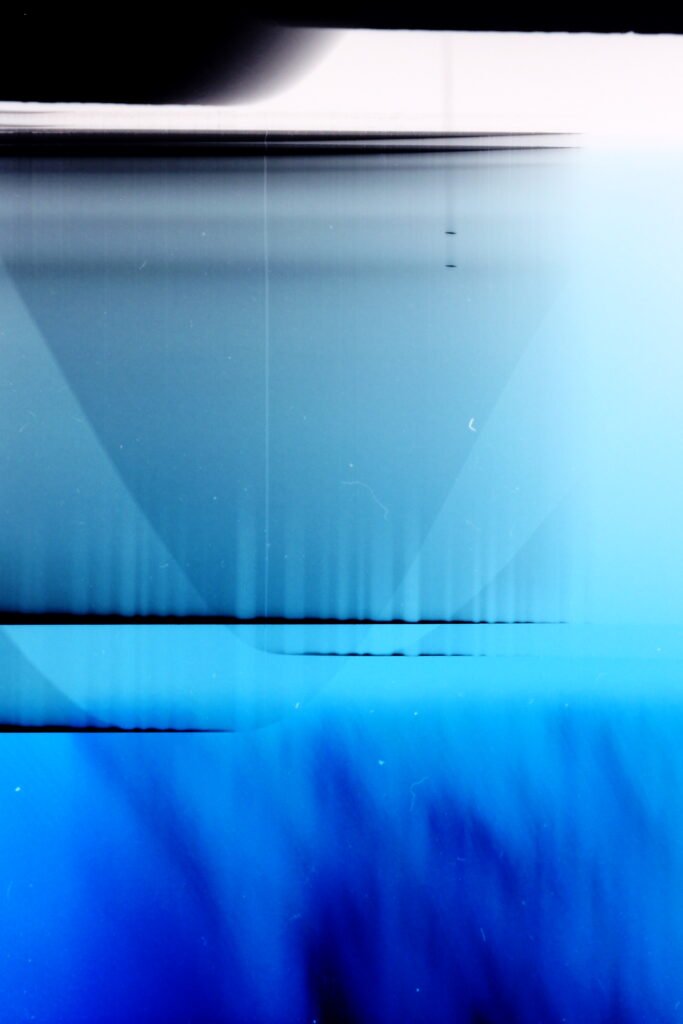
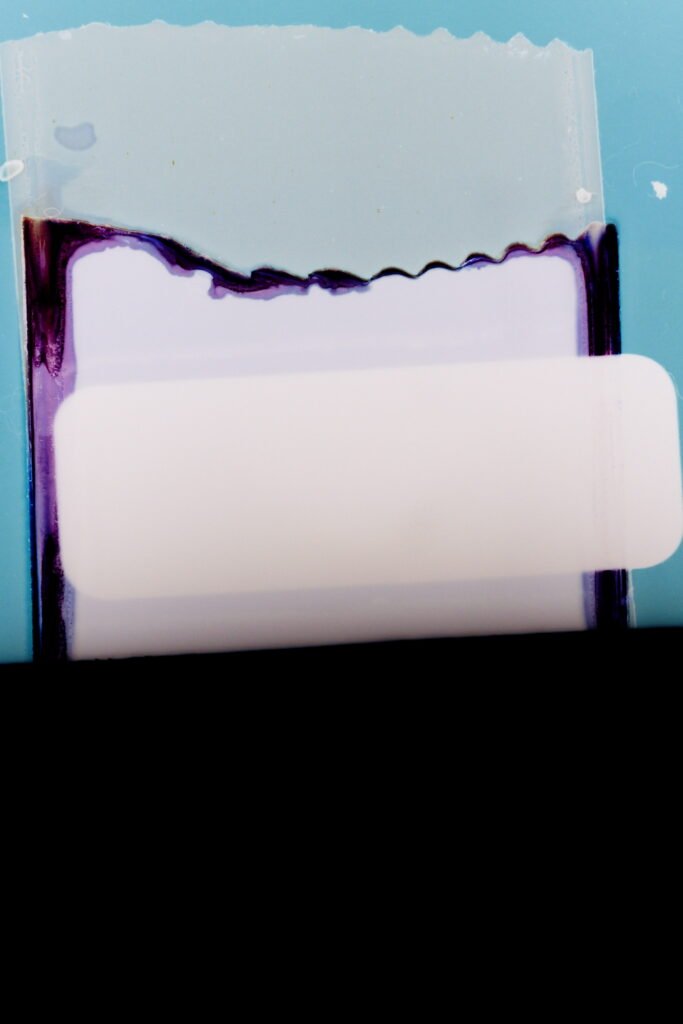
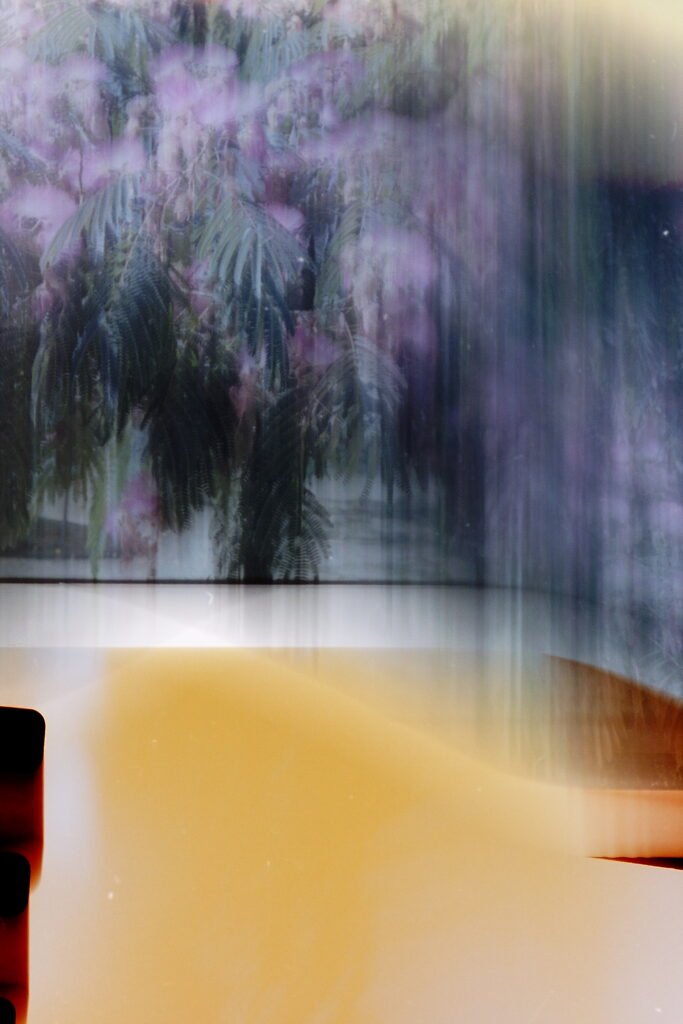
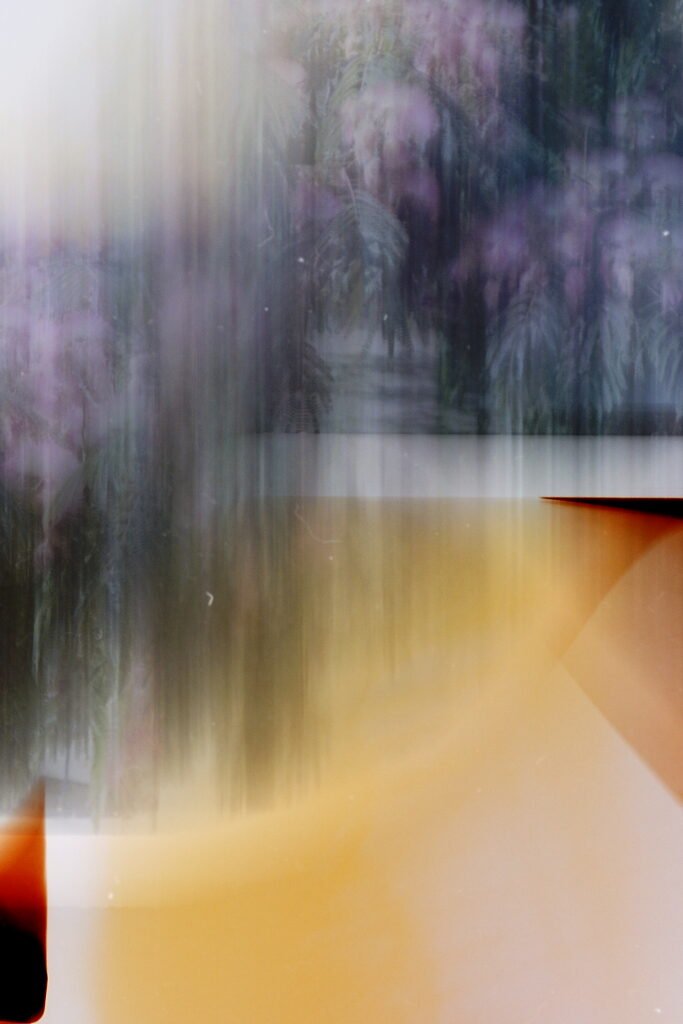
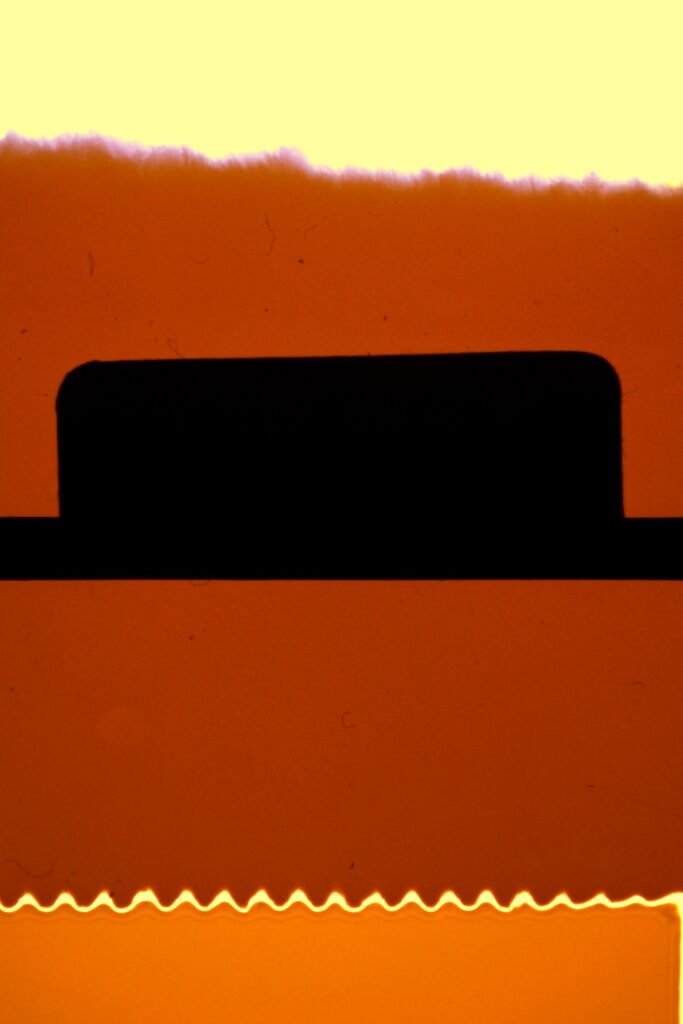
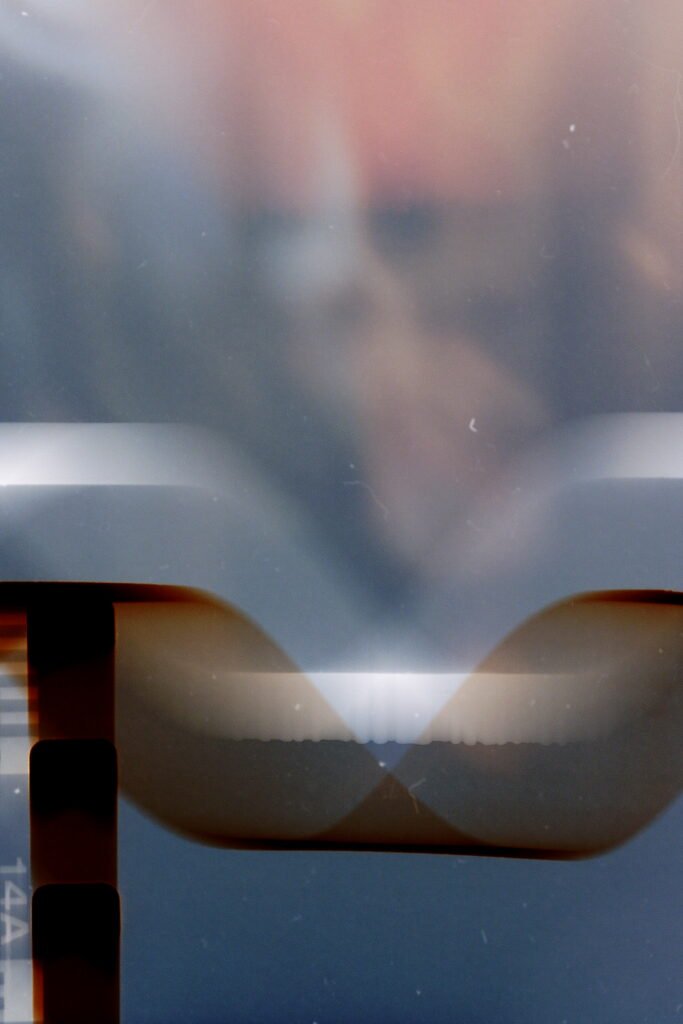
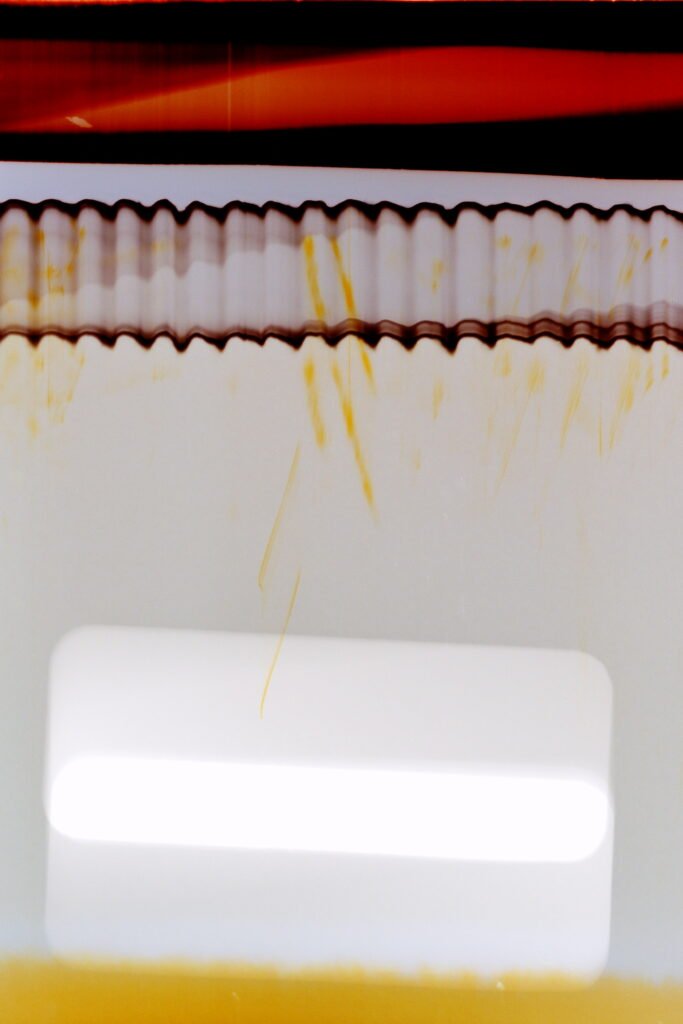
I began experimenting with data corruption and different forms of alteration: scanning my film negatives with a malfunctioning machine, databending with Audacity, and manipulating an image's data by opening it as a text file. I gradually built an archive of images, each altered in a different and partly unpredictable way.
But my interest in glitch quickly went beyond its visual aesthetic. Through the work and writings of artists such as Rosa Menkman and Phillip David Stearns, as well as experimental electronic practices such as Look Mum No Computer, I discovered a much broader way of thinking about technological failure, misuse and the modification of machines.
I also discovered the glitch community itself: a fascinating subculture of artists, musicians, hackers and experimenters sharing techniques and alternative ways of interacting with technology. What particularly interested me was that these practices were not confined to photography. Data, signals and machines could be bent and disrupted across image, video and sound.
This became a central part of Blue. My photographic experiments gradually developed into moving images: I assembled my archive of corrupted photographs into a stop-motion video, allowing different glitches to collide, disappear and transform into one another. At the same time, I composed and produced an original soundtrack in Ableton, experimenting with distortion, repetition and different forms of sonic glitch.
The project eventually became an audiovisual installation, created during the first year of my Master's degree. The video was projected approximately 2.3 metres high inside a square room plunged into darkness, while the composition filled the space with sound. Photography was no longer experienced as a single, fixed image, but as something moving, unstable and immersive.
Looking back, Blue became the starting point of a research process that continues to run through my work today. What began as an attempt to take photography into unfamiliar territory gradually led me towards the technological apparatus itself, eventually prompting me to physically open cameras, modify their electronic systems and experiment with circuit bending.
The question was no longer only what I could photograph, but what photography itself could become when its tools stopped behaving as intended.